The Fundamental Clinical Truths of Endodontics
Oral Science and the Thunder Bay Dental Association presents

The Fundamental Clinical Truths of Endodontics

In-person Event
October 2nd 2026
9:00 am – 4:00 pm / Doors: 8:00 am

1 Valhalla Inn Rd, Thunder Bay, ON, Canada
Thepointofsale.com acts as an agent for Thunder Bay Dental Association in the context of online display and ticket sales of their events.
For more info about this event, please contact the event organizer, Thunder Bay Dental Association, at snmelnik@lakeheadu.ca.

Buy Tickets

Synopsis

This course delivers a clear, start‐to‐finish endodontic workflow built around the essential clinical principles that drive predictable results. Working across multiple teeth—from simple to complex—you will learn how to apply modern technology, efficient techniques, and coordinated support from your primary assistant to create a consistent, repeatable system.

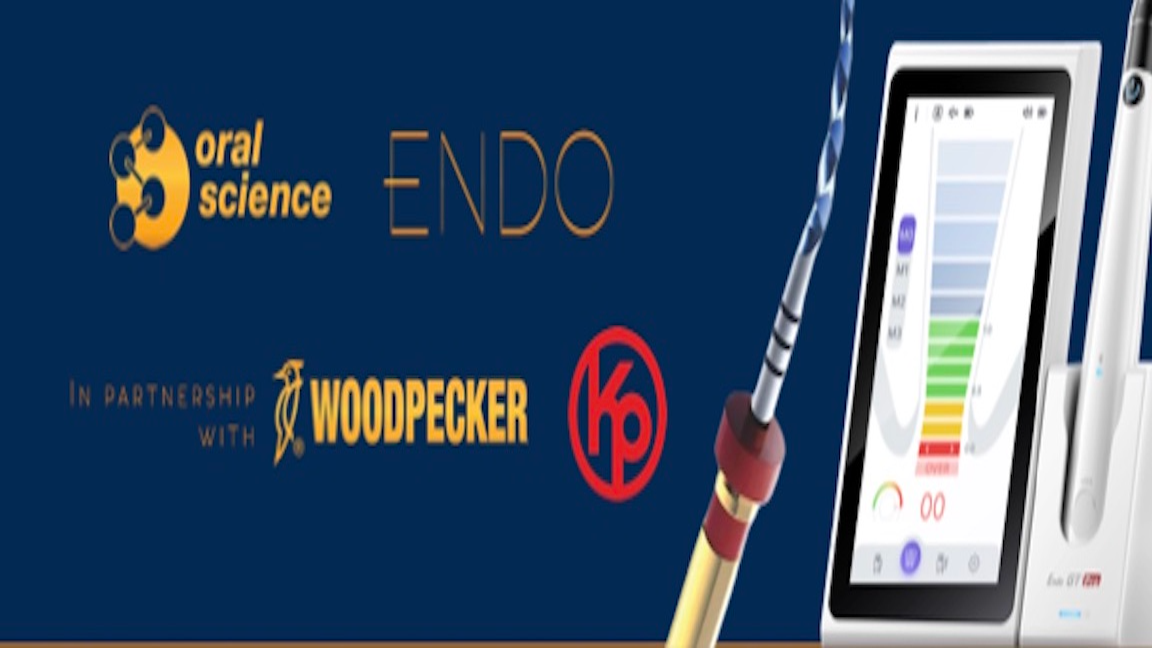
We will cover the full sequence: diagnosing challenging cases, managing anesthesia for “hot teeth,” performing ultrasonic‐enhanced access, and recovering the complete root canal system. You will examine how AI‐enabled endodontic motors with real‐time apex control, torque correction, and adaptive kinematics reduce file separation and improve shaping accuracy. The course also reviews how heat‐treated files and smaller blanks support minimally invasive shaping without compromising disinfection. Your primary assistant is integrated into every stage of the workflow—supporting irrigation sequencing, ultrasonic activation, material handling, and coronal sealing—to mirror efficient, real‐world practice.The focus remains on what works: understanding the technology behind modern endodontics, using tools that preserve structure while achieving effective cleaning, and maintaining a closed system from access to coronal seal. The goal is a stable, reproducible approach to treating the endodontically involved tooth. You will leave with a clear roadmap for managing complex anatomy, using AI‐driven motors and advanced file systems, and applying bioactive materials to achieve durable, precise, and predictable outcomes.

Learning Objectives

Identify the anatomical features on a 3D tooth replica based on micro-CT images of a lower molar with intricate canal anatomy.

Use a intelligent sequence of files for instrumentation.

Employ Passive Ultrasonic Irrigation or Continuous Ultrasonic Irrigation and the piezoelectric ultrasonic unit.

Compare the cleanliness achieved through the proposed technique versus conventional irrigation by evaluating both methods.

Perform a single cone obturation using Bioceramic sealer and selected gutta-percha.

Checking availabilities...

Synopsis

This course delivers a clear, start‐to‐finish endodontic workflow built around the essential clinical principles that drive predictable results. Working across multiple teeth—from simple to complex—you will learn how to apply modern technology, efficient techniques, and coordinated support from your primary assistant to create a consistent, repeatable system.

We will cover the full sequence: diagnosing challenging cases, managing anesthesia for “hot teeth,” performing ultrasonic‐enhanced access, and recovering the complete root canal system. You will examine how AI‐enabled endodontic motors with real‐time apex control, torque correction, and adaptive kinematics reduce file separation and improve shaping accuracy. The course also reviews how heat‐treated files and smaller blanks support minimally invasive shaping without compromising disinfection. Your primary assistant is integrated into every stage of the workflow—supporting irrigation sequencing, ultrasonic activation, material handling, and coronal sealing—to mirror efficient, real‐world practice.The focus remains on what works: understanding the technology behind modern endodontics, using tools that preserve structure while achieving effective cleaning, and maintaining a closed system from access to coronal seal. The goal is a stable, reproducible approach to treating the endodontically involved tooth. You will leave with a clear roadmap for managing complex anatomy, using AI‐driven motors and advanced file systems, and applying bioactive materials to achieve durable, precise, and predictable outcomes.

Learning Objectives

Identify the anatomical features on a 3D tooth replica based on micro-CT images of a lower molar with intricate canal anatomy.

Use a intelligent sequence of files for instrumentation.

Employ Passive Ultrasonic Irrigation or Continuous Ultrasonic Irrigation and the piezoelectric ultrasonic unit.

Compare the cleanliness achieved through the proposed technique versus conventional irrigation by evaluating both methods.

Perform a single cone obturation using Bioceramic sealer and selected gutta-percha.

Dr. Ken Sorota

Ken Serota, DDS, MMSc, graduated from the University of Toronto Faculty of Dentistry

in 1973 and received his Certificate in Endodontics and Master of Medical Sciences in

Nuclear Medicine degree from the Harvard-Forsyth Dental Center in Boston,

Massachusetts. He was awarded the George W. Switzer Memorial Award for

excellence in prosthodontics in 1973. In 1981, he was awarded the American

Association of Endodontics Memorial Award in Research. In 1987 he received the

Ontario Dental Association Award of Merit for his contributions to continuing

education. In 2000, he founded ROOTS, the first online Endodontic forum and

coordinated the first of ten ROOTS Summits. In 2004, in concert with Oemus Media, he

founded the ROOTS Journal. In 2015 he founded NEXUS, to integrate all the dental

disciplines. Contributing editor to Endodontic Practice, he has published over 70

articles and has lectured internationally on endodontics and implants.

April Doucette, CDA Level II

April Doucette is a Level II Dental Assistant with over 20 years of experience. A

graduate of George Brown College, she began her career in endodontics with Dr. Gary

Glassman, where she developed a strong passion for the specialty. She has since

contributed to hands-on training courses across the GTA and Ontario, including major

events such as the PDC and ODA, supporting advanced techniques involving

microscopes and surgical procedures.Now based in the Niagara region, April is

committed to continuous learning, helping others, and delivering excellence in both

clinical care and business through her role as Integration Specialist at Oral Science.